
Most of what's left after a garage clear-out sorts by one number: 20.
Here is the working, across four sets of NSW rules. A Community Recycling Centre takes household quantities, as a guide a maximum container of 20 litres or 20 kilograms for each waste type. A Household Chemical CleanOut takes up to 20 L or 20 kg of a single item. The sites that collect gadgets with built-in batteries do not take items over 20kg, except e-bikes whose battery can't be removed. Large removable batteries of 5 to 20kg go to a centre or a CleanOut.
So the line runs through all four. Keep each type to a household-sized container under 20 kg and the state's problem-waste network is built for it. Above that line, or with paint in bulk, call first.
TVs, computers and mattresses take routes of their own, set out below. Hunters Hill Removals' advice is to sort all of these before the Clean Up booking and well before moving day, so the kerb pile and the truck each carry only what they should.
What should come out of the pile before the Clean Up?
The pile
- 1
Council Clean Up
check the council's own list
- 2
Community Recycling Centre or Household Chemical CleanOut
paint, motor and cooking oils, gas bottles, fire extinguishers, smoke detectors, fluoro globes and tubes, household batteries
household quantities, as a guide 20 litres or 20 kilograms per waste type; paint up to 100 litres in 20 litre containers at certain CleanOut events; not for business quantities; some centres charge, so contact first
- 3
B-cycle drop-off
loose batteries under 5 kg
- 4
E-waste drop-off
TVs, computers, printers; free for households under the national scheme, fees may apply at points outside it
- 5
Mattress
hard rubbish, approved recycler, retailer take-back, or charity (call first)
What the council's Clean Up collects is the council's call, so check its own Clean Up page before you put anything out. Our Downsizing Your Home Checklist covers the booking itself. This guide picks up the leftovers that need another route.
Start with the problem waste. The EPA describes Community Recycling Centres as permanent drop-off centres for household problem waste that can't go in council kerbside collections. NSW householders can use them year round, free of charge. The same page says some centres accept other items or charge, so contact the centre first.
These are also the items to keep off a removal truck. An open paint tin, a gas bottle or a loose battery has no place among boxed linen and a sofa. AFRA, the removals industry's peak body, keeps a list of items needing special attention. Gas BBQ cylinders travel only with a purging certificate from a Standards Australia-certified test station. Petrol is drained from lawnmowers. Pool chemicals and fire extinguishers are on the list too.
One limit catches renovators. Businesses are not eligible to use CRCs, and CleanOut does not accept business or commercial quantities. Leftovers from a trade job need a commercial waste service.
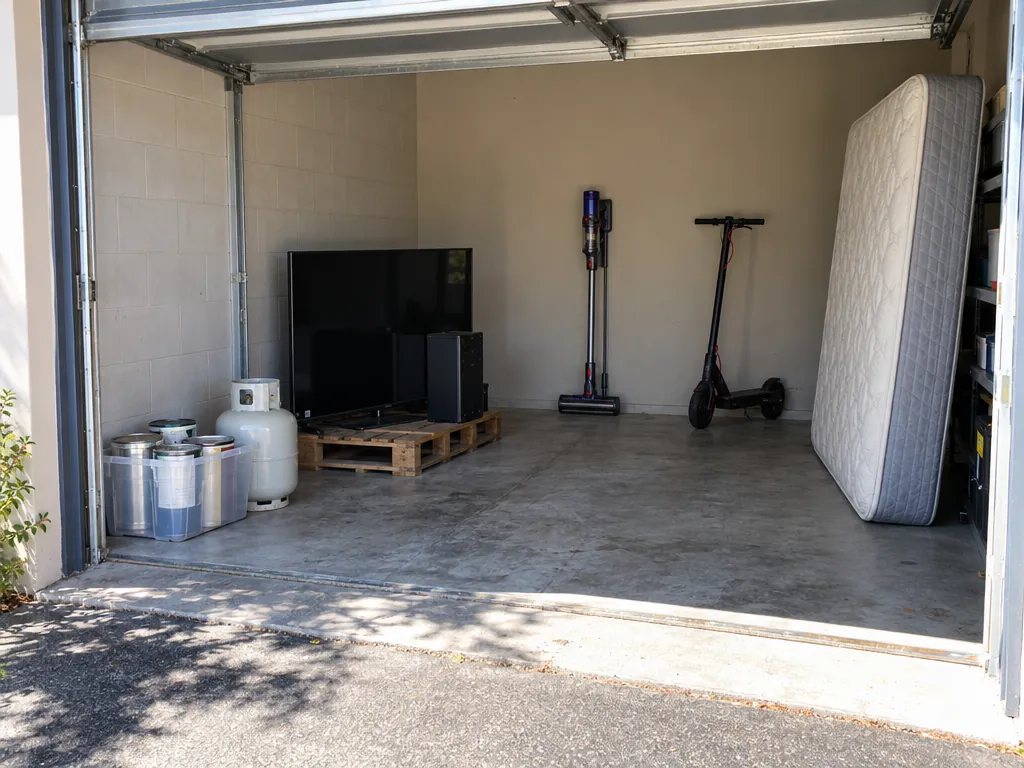
Where do old paint and household chemicals go?
Two routes, one permanent and one on set dates.
The permanent one is a Community Recycling Centre. Its core items are paint, motor oils, household batteries, gas bottles, other oils, smoke detectors, fire extinguishers, car batteries, and fluoro globes and tubes. The EPA's list of centres that take embedded-battery items includes the Northern Sydney Community Recycling Centre, 8 Waltham Street, Artarmon. The EPA notes that each location has varying operating times, so check the hours before you drive.
The other route is a Household Chemical CleanOut. These are free drive-thru services held on specified dates, and Sydney events are open to all NSW residents unless stated. CleanOut takes a longer list, including acids and alkalis, pesticides, poisons, pool chemicals, solvents, cooking oils and hobby chemicals, up to 20 L or 20 kg of a single item.
Paint is the exception worth knowing about. Paint of up to 100 litres (in 20 litre containers) is accepted at certain events, so check the quantity limit with the council before you load a renovation's worth. For upcoming dates and locations, use the EPA's page to find CRCs or a Household Chemical CleanOut.
Two things surprise first-timers. At CleanOut you must stay in your vehicle, and the containers you hand over are not returned. Bring the paint in tins you are happy to lose.
Before the drop-off trip
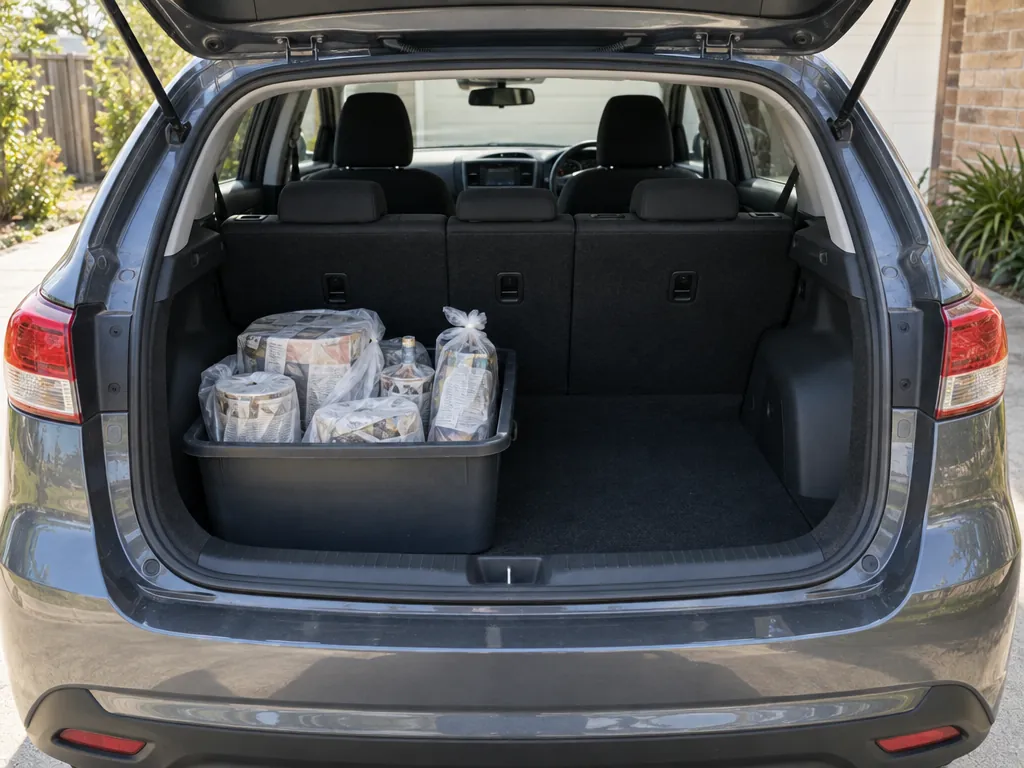
Packing the car matters as much as the destination. Keep chemicals in original, labelled, well-sealed containers, wrap liquids in newspaper, then a plastic bag, then a bucket or tray, and carry them in the boot, away from passengers.
Where do batteries and vapes go?
under 5 kg, loose small batteries
B-cycle drop-offs at many supermarkets, hardware and electronics stores; tape the terminals, keep in a ventilated glass container
5 to 20 kg, removable large batteries (e-scooter, e-bike, vacuum, power tool)
Community Recycling Centre or CleanOut
20 kg
embedded-battery sites take no items over 20 kg, except e-bikes whose battery can't be removed
- car batteries: automotive shops, CRCs or CleanOut
- mobile phones: MobileMuster
- TVs, computers, printers: e-waste collection
No battery goes in any kerbside bin, red, yellow or green lid, because they can catch fire in garbage trucks and waste facilities.
Size decides the route. Small loose batteries under 5kg go to B-cycle drop-offs at many supermarkets, hardware stores and electronics shops. Tape the terminals and keep them in a ventilated glass container until you drop them off. Removable batteries of 5 to 20 kg, from an e-scooter, e-bike, vacuum or power tool, go to a CRC or CleanOut. Used car batteries go to automotive shops, CRCs or CleanOut.
The harder ones are gadgets with the battery built in. The CRC network takes Bluetooth speakers, electric toothbrushes, e-scooters, e-bikes, hoverboards, power banks, cordless and robot vacuums, vapes and e-cigarettes, and smart watches. If the battery comes out easily, bring only the loose battery.
Vapes never go in a kerbside bin, because vapes contain residual chemicals and embedded batteries; CleanOut events collect them.
Two items go elsewhere. TVs, computers and printers go to an e-waste collection, and mobile phones go to MobileMuster.
Where do old TVs and computers go?
First ask whether it still works. The EPA's advice is that a working TV or computer can go to a second-hand shop, charity, friends or family. A working monitor is often more use to someone else than to the recycler.
If it doesn't work, the National Television and Computer Recycling Scheme covers TVs, laptops, tablets, PCs, monitors, printers and computer parts and peripherals. It is free for households and small businesses, but not every drop-off point is part of the scheme, so fees may apply at some. Ask whether a site is in the scheme before you unload.
To find one, Recycle Mate and Planet Ark's RecyclingNearYou list e-waste and battery drop-off points. While a set waits for its trip, store it out of the weather, not on the nature strip in a spring downpour.
How do you get rid of an old mattress?
Old mattress
Bed bugs or active infestation?
Yes wrap it, treat it as contaminated waste, speak to the recycler before pickup
No
Clean and in good condition?
Yes charity: call first, many no longer accept used mattresses
No, or charity says no
Buying a new one?
Yes ask the retailer about take-back and whether it includes recycling
Otherwise
approved recycler from the ABSC national directory: drop-off (many free) or pickup
kerbside hard rubbish is a route, but most mattresses collected that way still go to landfill
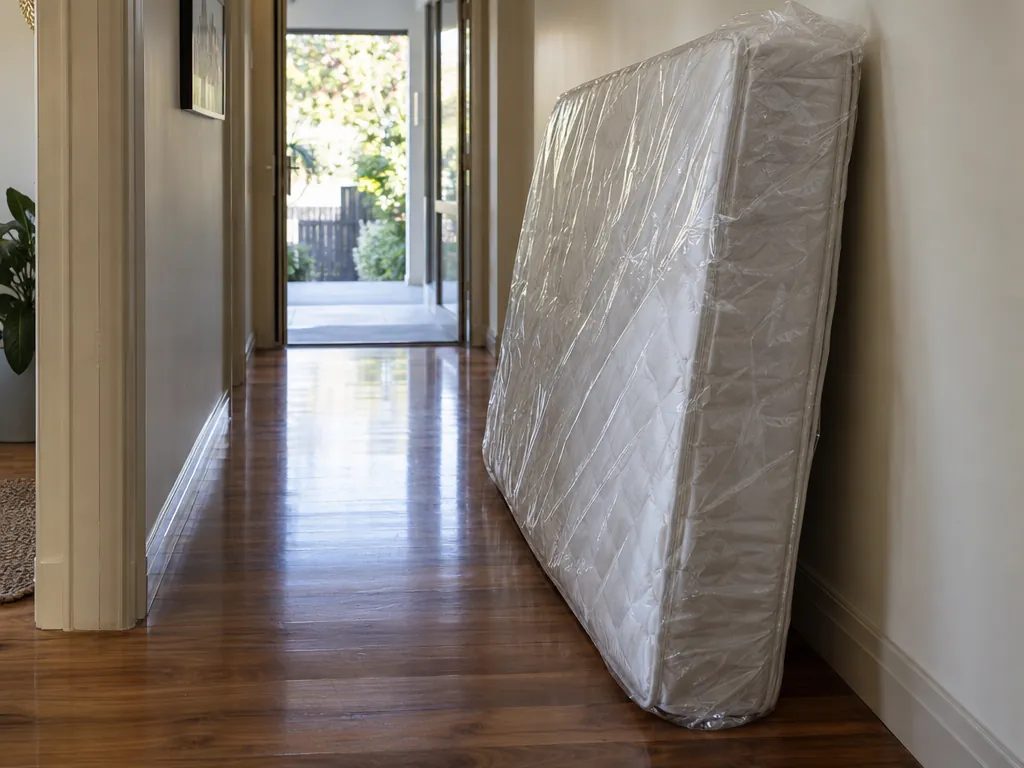
A mattress can't go in a wheelie bin. The Australian Bedding Stewardship Council lists four routes: hard rubbish, a recycler, a charity collection or a private removalist.
Hard rubbish is the easy one, but the Australian Bedding Stewardship Council says most mattresses collected via kerbside hard rubbish still go to landfill. Approved recyclers recover up to 75% of the materials.
Charity is worth a phone call, not a trip. Most stores of two major charities no longer accept used mattresses, so call before you load one.
Recycling is the route with the clearest costs. Many approved recyclers offer free drop-off, and pickup usually carries a fee for each mattress, so a household clearing a queen and two singles pays it three times. Ask each recycler for its current price. Find one in the ABSC national directory of approved recyclers, which lists several in Sydney.
Approved recycler drop-off
many are free
Approved recycler pickup
a fee for each mattress, ask for the current price
Retailer take-back
usually a fee, ask whether it includes recycling
Council hard rubbish
most mattresses collected this way still go to landfill
Buying a new bed for the new house? Many retailers will collect the old mattress when they deliver the new one, usually for a fee. Ask what it costs and whether that includes recycling.
One exception changes everything. A mattress with bed bugs or an active infestation must be wrapped and disposed of as contaminated waste. Tell the recycler before pickup.
Where does each leftover go?
| Item | Route | Limit | Catch |
|---|---|---|---|
| Paint and household chemicals | Community Recycling Centre or Household Chemical CleanOut | household quantities, as a guide 20 L or 20 kg per waste type; paint up to 100 L in 20 L containers at certain CleanOut events | not for business quantities; some centres charge, contact first; CleanOut runs on set dates |
| Small loose batteries | B-cycle drop-off | under 5 kg | tape terminals, ventilated glass container |
| Large removable batteries | CRC or CleanOut | 5 to 20 kg | bring only the loose battery if it comes out easily |
| Gadgets with built-in batteries, vapes | CRC embedded-battery sites; vapes also at CleanOut | no items over 20 kg (except e-bikes whose battery can't be removed) | check each site's hours |
| TVs and computers | e-waste drop-off under the national scheme | none stated | fees may apply at points outside the scheme |
| Mobile phones | MobileMuster | none stated | none stated |
| Mattresses | approved recycler, retailer take-back, hard rubbish, charity | many recyclers offer free drop-off; pickup and retailer take-back usually carry a fee, so ask for the current price | most hard-rubbish mattresses still go to landfill; most stores of two major charities no longer take them |
The table puts the routes side by side. The pattern holds: household amounts, a household-sized container, and a call ahead wherever the item is large, unusual or from a business.
What's the next step if a move is coming up?
Do it in this order. Sort the four groups out of the garage and laundry. Make one trip to a Community Recycling Centre or a CleanOut with the chemicals and batteries, packed in the boot. Arrange the mattress and the e-waste. Then book the council Clean Up for what's left, using our downsizing checklist for the booking side.
What remains is the furniture and the boxes you are taking with you. When you're ready to plan that part, request a callback from Hunters Hill Removals and talk through the date and the access. If you are still choosing a mover, our guide to comparing removalists sets out what the quote should say.
Sources
- https://www.epa.nsw.gov.au/Your-environment/Recycling-and-reuse/household-recycling-overview/community-recycling-centres
- https://www.epa.nsw.gov.au/Your-environment/Recycling-and-reuse/household-recycling-overview/household-chemical-cleanout
- https://www.epa.nsw.gov.au/Your-environment/Recycling-and-reuse/household-recycling-overview/find-crcs-or-hcco
- https://www.epa.nsw.gov.au/Your-environment/Recycling-and-reuse/household-recycling-overview/embedded-batteries
- https://www.epa.nsw.gov.au/Your-environment/Recycling-and-reuse/never-bin-a-battery
- https://www.epa.nsw.gov.au/Your-environment/Recycling-and-reuse/warr-strategy/product-stewardship-schemes/ewaste
- https://www.dcceew.gov.au/environment/protection/waste/consumers/recycling-drop-off
- https://www.bedding.org.au/recycling/dispose-of-a-mattress
- https://www.bedding.org.au/recycling/find-a-recycler
- https://afra.com.au/moving/moving-tips/ineligible-items/
Pictures in this guide are illustrations, not photos of our jobs.