
The run-in is the story
Whichever bridge the truck crosses, the last stretch of a Woolwich move is the length of Woolwich Road, and it does not hurry. We time the run into the day rather than pretending it away, and on a two-truck job we stagger the second truck so the street never holds both at once.
Standing near the point
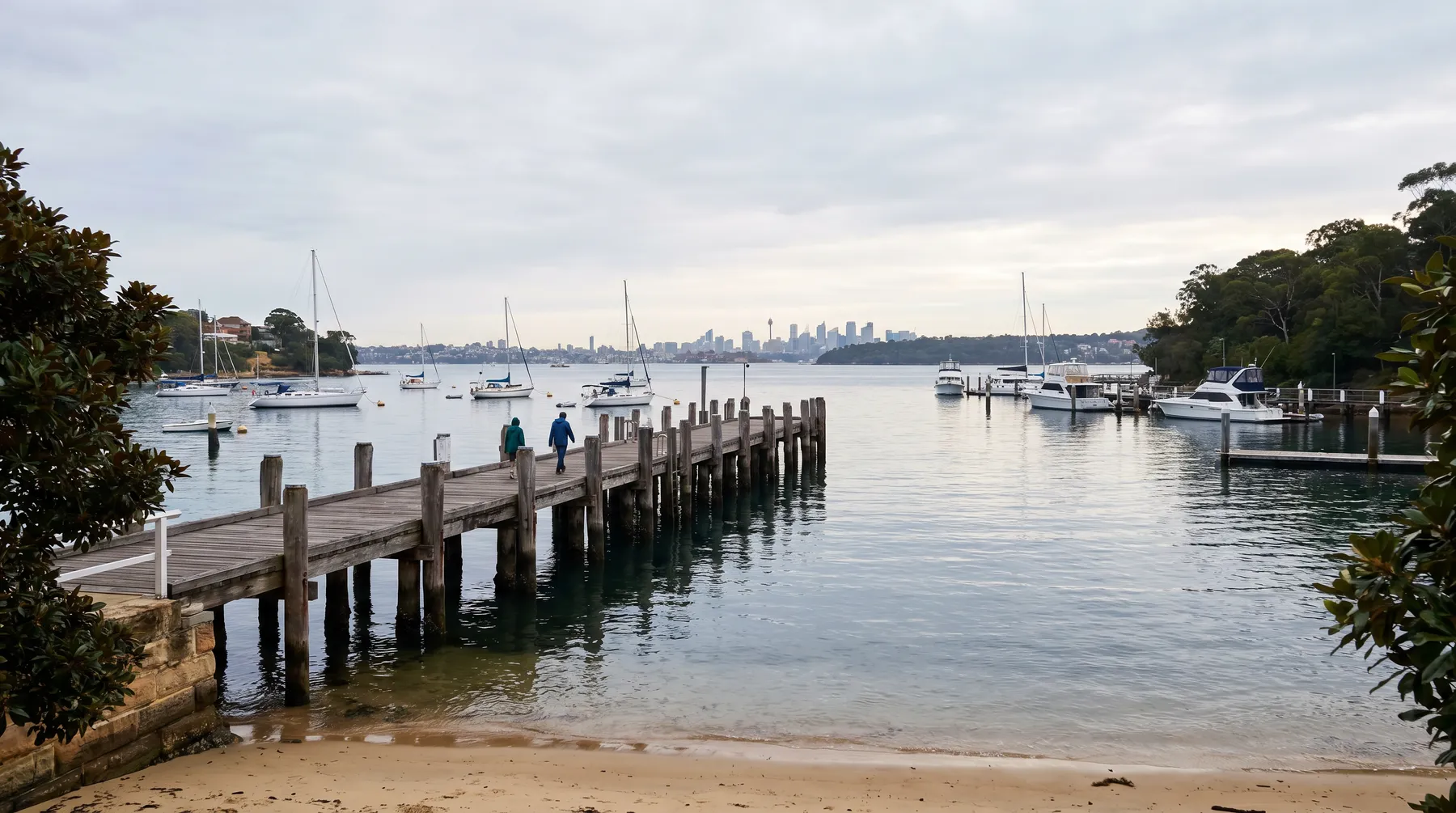
The blocks between Gale Street and The Point Road hold the wharf and the weekend visitors who come for the water. Standing room tightens accordingly, most of all on Saturdays. Our habit is simple: pick the standing spot on a walk-through during the week, agree it with you, and stage the carry from your gate so the truck sits where it is welcome.
The houses themselves
Woolwich holds a few hundred addresses, roughly two houses for every unit, and the houses lean grand: long verandahs, deep gardens, more than one gate between door and kerb. That is our lead work. The full protection method comes out here as a matter of course: runners the length of the hall, boards over thresholds, and the piano measured against the doorway before the van is packed.
Streets we get asked about
- Woolwich Road: the spine. Everything arrives and leaves along it, so the day is timed around it.
- Valentia Street: down to the wharf, busiest at ferry times; carries get staged clear of the turnaround.
- The Point Road and Mount Morris Street: the point's end, tight and worth a walk-through before any large van commits.
- Gale Street and Clarke Road: the mid-Woolwich pockets, friendlier standing, longer garden approaches.