
Packing, with us or before us
Pack yourself and the crew loads sealed cartons all day, which is the cheapest way to buy hours back. Or have us pack: a packing crew arrives ahead of the move with proper cartons, butchers paper and a system, and works room by room, labelled by destination, so the unload puts things where they will live, not where they will sit.
- Kitchen and china: wrapped one piece at a time. Slow here, fast everywhere else.
- Books and files: small cartons only. A big carton of books is a broken carton.
- Wardrobes: hanging clothes travel on rails in port-a-robes, not folded into creases.
- The last-day box: kettle, chargers, keys, school shoes. It rides in the cab, not the truck.
Partial packing is normal and sensible: most households do the easy rooms themselves and hand us the kitchen and the glass.
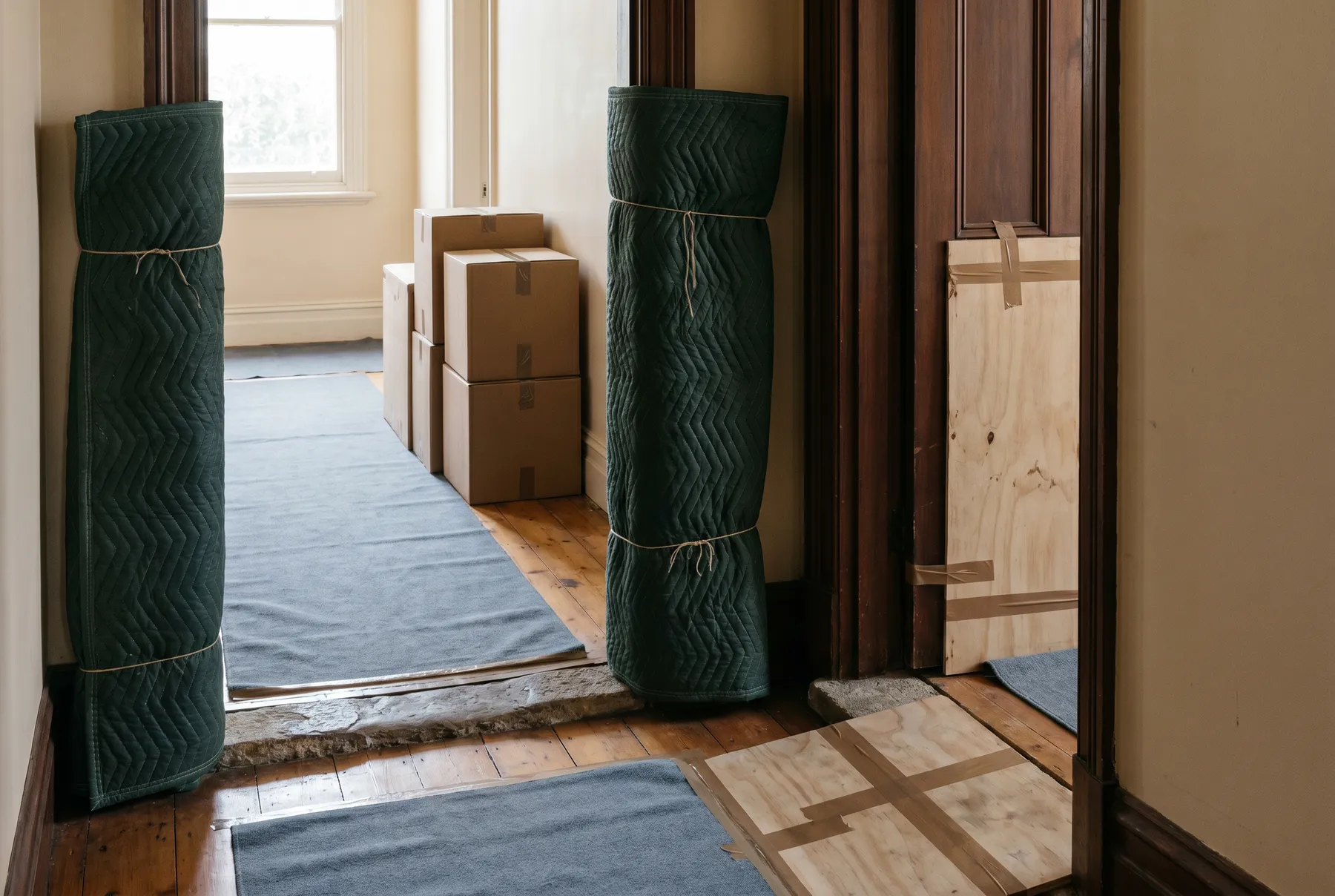
The protection method
This is the part we are known for, and it is deliberately unexciting:
Runners on every carry path
Canvas floor runners over boards and tiles along every route the crew will walk, not just the hallway. On polished originals, nothing rolls or drags bare.
A board over the threshold
The threshold stone or step takes the day's traffic on a protective board, taped and checked, so a hundred crossings land on ply, not stone or timber.
Padding on the surrounds
Quilted pads tied to door frames and architraves at the tight turns. The pad takes the brush; the paint and the stone do not.
Measured before packed
The widest pieces get offered up to the narrowest opening on paper first. If a door must come off its hinges, we know on Tuesday, not at ten past eight.
The full step-by-step, including what we do differently on sandstone, is written up in the sandstone guide.